Neanderthal Brains: 10 Things You Need to Know About Their Cognitive Abilities
If you've ever pictured a Neanderthal as a brutish, dim-witted cousin to modern humans, you're not alone. That stereotype has persisted for decades, fueled by early comparisons of skull shapes and assumptions about intelligence. But a recent study that used MRI scans of living people and casts of ancient skulls reveals a far more nuanced story. Instead of being mentally inferior, Neanderthals likely possessed brains that were just as capable as ours, with similar variation in size and structure. This discovery doesn't just rewrite the Neanderthal narrative—it also challenges our understanding of what made Homo sapiens successful. Here are ten essential insights from this groundbreaking research.
1. Skull Shape Doesn't Dictate Brain Function
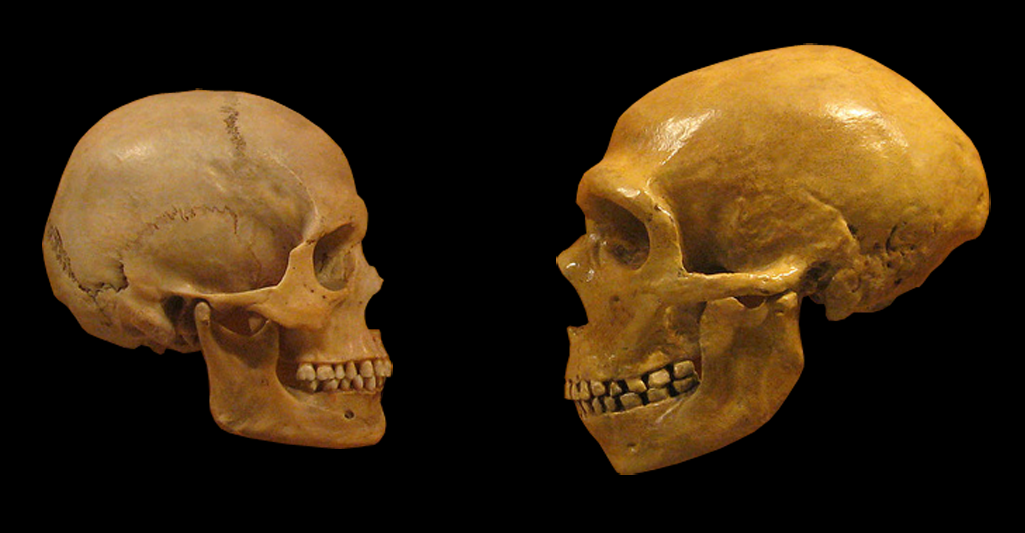
Neanderthal skulls are famously elongated and low-vaulted, while ours are rounder. For years, researchers assumed these visible differences reflected underlying cognitive disparities. However, the shape of a skull is influenced by factors like diet, development, and even climate—not just brain structure. The endocast (a cast of the braincase) can reveal brain surface features, but the overall shape does not correlate with intelligence. The new study emphasizes that a rounded skull does not equal a smarter brain. In fact, many modern humans have skull shapes that overlap with Neanderthal ranges, especially when you account for natural variation.
2. Endocasts Offer a Window into Ancient Minds
When a person dies, the inside of their skull retains the imprint of their brain's outer contours. By filling that space with resin or using digital scans, researchers create an endocast—a 3D model of the brain's surface. This technique has been used for decades to study Neanderthal brains. The famous "Taung Child," an Australopithecus africanus specimen, produced a natural endocast when sediment filled its skull and crystallized over 2.8 million years. Modern endocasts are far more precise, allowing scientists to measure not just size but also the shape of key regions like the frontal and temporal lobes.
3. MRI Scans Go Head-to-Head with Fossil Casts
The study's authors took a novel approach: they compared MRI scans from over a thousand modern people with digital endocasts from Neanderthal and early Homo sapiens fossils. By aligning these datasets, they could directly measure differences in brain size, shape, and internal proportions. This comparison goes beyond simple skull measurements—it accounts for the actual brain tissue and its variations. The results were striking: the range of brain sizes among modern humans is actually larger than the difference between Neanderthals and Pleistocene Homo sapiens. In other words, you'll find more variation in a typical city today than between two extinct human species.
4. Brain Size Variation Within Modern Humans Exceeds Species Differences
One of the most counterintuitive findings is that modern humans vary more among themselves than Neanderthals varied from early Homo sapiens. For example, some modern individuals have brains over 1,600 cubic centimeters, while others fall below 1,100 cubic centimeters. This range dwarfs the average difference between Neanderthals (around 1,450 cc) and early Homo sapiens (around 1,350 cc). The study shows that Neanderthal brain size falls comfortably within the modern human range—even overlapping with many people alive today. This suggests that brain size alone cannot explain why one group thrived while the other disappeared.
5. Brain Size Is a Terrible Predictor of Intelligence
In popular culture, bigger brains often mean brighter minds. But science has consistently shown that brain size correlates only weakly with cognitive ability, especially across species. Factors like neuron density, folding patterns, and connectivity matter far more. For instance, some small-brained birds solve complex problems, while large-brained whales don't build cities. The Neanderthal brain's size falls within the modern human range, but its structure—particularly the shape of the cerebellum and frontal lobes—might have differed slightly. Yet even those differences do not imply a cognitive disadvantage. The archaeological record suggests Neanderthals made tools, controlled fire, and buried their dead—all complex behaviors.
6. Archaeological Evidence Matches Cognitive Equality
If Neanderthals were as intellectually capable as early Homo sapiens, you would expect to find similar cultural achievements. And indeed, excavations reveal that Neanderthals crafted sophisticated stone tools (Mousterian industry), used natural pigments for body decoration, and possibly created cave art. They also cared for injured group members, as shown by skeletons that healed from severe injuries—implying social support. The new study aligns perfectly with these archaeological clues, reinforcing the idea that cognitive differences were minimal. The real question becomes: why did Neanderthals go extinct if they were equally smart?

7. Outsmarting Isn't the Answer to Neanderthal Extinction
A longstanding hypothesis holds that Homo sapiens outcompeted Neanderthals by being smarter—better language, planning, or innovation. But if brain size and cognitive capacity were similar, that explanation falls apart. Alternative theories become more plausible: perhaps Homo sapiens had higher population numbers, better resistance to diseases, or more flexible social structures. The new research supports the idea that extinction was not due to intellectual inferiority but rather a combination of small population sizes, competition for resources, and possibly climate change. Neanderthals may have been simply unlucky, not dumber.
8. Previous Studies Overhyped Brain Differences
Earlier work on endocasts often highlighted differences in the shape of Neanderthal brains, such as a flatter frontal lobe or a more elongated occipital region. Some researchers interpreted these as signs of lower cognitive function—poorer memory, less complex language. However, those studies usually had small sample sizes or compared Neanderthals only to modern humans (not to ancient Homo sapiens). The new study corrects this by including a broader dataset and accounting for natural variation. It finds that many supposed "unique" Neanderthal features appear in some modern human endocasts as well. The differences are real but subtle, not indicative of a fundamentally different mind.
9. Implications for Human Evolution
If Neanderthals had brains as capable as ours, it changes how we view human evolution. It suggests that cognitive sophistication evolved earlier than previously thought, possibly in the common ancestor of Neanderthals and Homo sapiens. It also means that the modern human brain is not the only successful configuration—there were multiple viable paths to intelligence. This has implications for understanding the evolution of language, art, and technology. Moreover, it raises questions about interbreeding: if Neanderthals were cognitively similar, then gene flow between groups might have been seamless, which aligns with genetic evidence that many of us carry Neanderthal DNA today.
10. A New Respect for Our Ancient Cousins
The study's bottom line is that Neanderthals deserve a rebrand. Instead of being portrayed as slow-witted brutes, they should be seen as a parallel human lineage with its own cultural and cognitive achievements. The variation in brain size and shape among Neanderthals matches that of modern humans, supporting the idea that they were just as adaptable and intelligent. This perspective doesn't diminish Homo sapiens but rather highlights the richness of human evolution. Next time you see a Neanderthal reconstruction, remember: that brain could have been yours.
In conclusion, the new research upends long-held assumptions about Neanderthal intelligence. By using modern imaging techniques and a broad comparative sample, scientists have shown that Neanderthal brains fall squarely within the range of variation seen in living humans. Brain size and shape are not reliable predictors of cognitive ability, and the archaeological record confirms that Neanderthals were capable of complex behaviors. The real lesson is one of humility: our species may not have triumphed because we were smarter, but because of a complex interplay of factors. As we refine our methods, we might discover that the boundaries between us and our ancient relatives are fuzzier than we thought.