10 Revelations from a Chaotic Valley: Mars’s Ocean Clues
For decades, scientists have debated whether Mars once held a vast ocean. Now, a colossal valley near the equator offers some of the strongest evidence yet. Shalbatana Vallis, stretching 1,300 kilometers, is a scarred landscape of ancient floods, collapsed terrain, and volcanic remnants. Each feature tells a story of a warmer, wetter Mars. Here are ten key insights from this chaotic valley that point to a lost ocean on the Red Planet.
1. A Colossal Wound on Mars
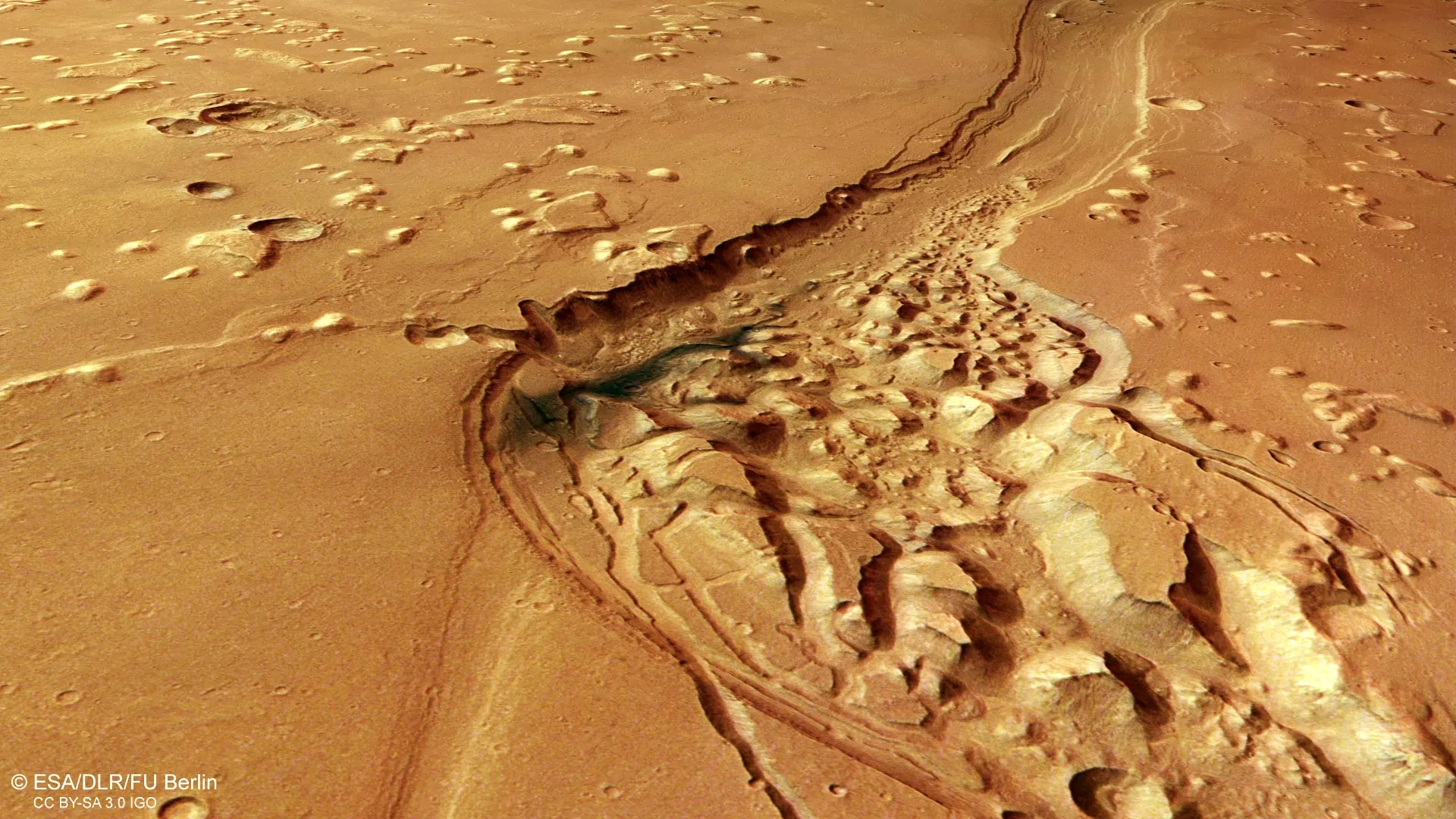
Shalbatana Vallis is one of the largest outflow channels on Mars, carved by catastrophic groundwater floods billions of years ago. Its sheer scale—roughly the distance from London to Rome—hints at the immense volume of water that once surged across the surface. The valley’s winding path and deep gorges suggest sustained, high-energy flows, likely from a subsurface aquifer. Such a massive release of water implies that Mars had enough water to fill an ocean basin, with the valley acting as a giant drain.
2. Groundwater Floods That Reshaped the Surface
The valley’s creation was no gentle trickle. Enormous floods of groundwater burst from the ground, probably triggered by volcanic heating or tectonic activity. These floods carved deep channels and transported vast amounts of sediment. The evidence lies in the streamlined islands and terraced walls along the valley. Similar features on Earth in the Channeled Scablands of Washington state show how floodwaters can sculpt landscapes. On Mars, the volume needed to carve Shalbatana Vallis would have been enough to fill a prehistoric Mediterranean-sized ocean.
3. Chaotic Terrain: The Collapse After the Flood
Where the groundwater erupted, the ground collapsed into what scientists call “chaotic terrain.” This jumbled landscape of blocks and depressions is a clear sign that subsurface ice or liquid water was suddenly removed. The chaos in Shalbatana Vallis is particularly extensive, covering areas larger than some US states. It suggests that the aquifer was not just a local pond but a regional water table. The collapsed terrain is like a giant sinkhole, offering a window into the underground water system that fed the ocean.
4. Lava Smoothed Plains: Volcanic Fire Meets Water
Volcanic activity played a dual role in Shalbatana’s history. Lava flows later smoothed parts of the valley, covering older flood deposits. This volcanic resurfacing indicates that the region was geologically active long after the floods ceased. The interaction between lava and water may have created hydrothermal systems, potentially suitable for life. The lava plains also act as a protective cap, preserving the underlying evidence of the ancient ocean—just as volcanic ash preserved Pompeii, here lava sealed a record of Mars’s watery past.
5. Volcanic Ash Layers: A Timestamp for Climate Change
Layers of volcanic ash embedded in the valley walls provide a chronological record. Each ash layer represents a significant eruption, allowing scientists to date when flood events occurred. By analyzing these layers, researchers have determined that the major floods happened around 3.5 billion years ago, during a period when Mars’s atmosphere was thicker and warmer. The ash also contains minerals that react with water, offering clues about the chemical composition of the ancient ocean. It’s like reading a history book written in volcanic dust.
6. Impact Craters as Water Level Markers
The valley is dotted with impact craters of varying ages. Some craters are filled with sediment, suggesting they were once submerged under water or ice. The distribution of these filled craters along the valley’s edges marks a consistent elevation—a possible ancient shoreline. If these craters were indeed filled by an ocean, they would indicate a water level that extended far beyond the valley itself, connecting to other basins. This shoreline hypothesis strengthens the case for a global ocean on early Mars.
7. The Case for a Warmer, Wetter Ancient Mars
All these features point to a past climate far different from today’s cold desert. For water to flow in such volumes, the atmosphere must have been thicker and temperatures above freezing. The presence of chlorine-bearing minerals and clay deposits supports a neutral to alkaline ocean chemistry. This environment would have been habitable for simple microbial life. The chaotic valley serves as a climate archive, telling us that Mars was once a blue planet with rivers, lakes, and an ocean.
8. Comparison to Earth’s Ocean Basins
When scientists map the valley’s drainage pattern, it resembles river systems feeding into an ocean on Earth. The valley’s delta-like deposits and sediment fans match those found at the mouths of major rivers like the Mississippi or Nile. By modeling the water flow, researchers estimate that the ocean’s volume could have been equivalent to about a third of Earth’s Atlantic Ocean. Such comparisons help us understand not just Mars, but also how planets evolve and lose their surface water.
9. Implications for Future Missions
Shalbatana Vallis is a prime target for future rovers or sample-return missions. Its layered terrain may preserve organic molecules or even microfossils. Understanding this valley will guide where we search for signs of past life. The chaotic terrain also holds clues about subsurface ice, which could be a resource for human explorers. Prioritizing this region for exploration could answer the ultimate question: was Mars ever truly alive? Missions like those studying the valley’s scale help justify the investment.
10. The Ocean Hypothesis Gains Strength
Each piece of evidence from Shalbatana Vallis—from flood scars to volcanic ash—builds a compelling case for an ancient Martian ocean. While some scientists remain cautious, the consistency of the data is hard to ignore. The valley is not an isolated feature; it connects to other lowland basins that could have been part of a single ocean. As more orbital data and potential rover visits pour in, the image of a watery Mars becomes clearer. The chaotic valley is not just a clue—it may be the Rosetta Stone of Mars geology.
In conclusion, Shalbatana Vallis is a remarkable natural chronicle of Mars’s dynamic past. From catastrophic floods to volcanic resurfacing, each layer tells of a world that once harbored an ocean. While the Red Planet is now a frozen desert, these ten insights remind us that its history is far from dead. Future missions will continue to decode the valley’s secrets, bringing us closer to understanding whether Mars ever had life—and whether our own planet is unique in the cosmos.